Page URL: https://practice.orangatamariki.govt.nz/practice-framework/whai-oranga/te-toka-tumoana/kaitiakitanga
Printed: 23/10/2026
Printed pages may be out of date. Please check this information is current before using it in your practice.
Roles, responsibilities and obligations to protect, keep safe, support and sustain tamariki, mokopuna and whānau oranga.
Relational practice process
Āta is a transformative approach to working in relationships, kaupapa and environments that invites opportunities to use time and space, to make contributions towards the pursuit of oranga.
This means, in our practice we are relating with, understanding with, planning with, acting with and reflecting with tamariki, rangatahi, whānau and others.
This involves connecting with tamariki, rangatahi, whānau and others by developing and attending to relationships in ways that generate a shared understanding of the lived experience of tamariki, rangatahi and whānau and their aspiration for oranga.
This supports us to make decisions and co-develop a plan.
When I maintain an oranga focus I don’t lose sight of harm and risk of harm or become risk saturated.
I am relational, inclusive and restorative in my practice with tamariki, rangatahi, whānau and others and consider the impact I may have on them.
I work with tamariki, rangatahi, whānau and others to define our different roles and tiaki responsibilities in order to understand what is impacting oranga.
As a responsible kaitiaki, I am transparent and create an environment where we can have courageous and sensitive conversations about harm and risk of harm.
I am supportive and non-judgemental when seeking understanding from tamariki, rangatahi, whānau and others.
I prepare and work with compassion and humility so that tamariki, rangatahi and whānau can feel comfortable to share their story with me.
When I make a mistake with tamariki, rangatahi, whānau or others I take responsibility for it and understand that this creates a space for restoration.
I work to understand how the roles of different people within the whānau and whanaungatanga networks protect, keep safe, support and sustain tamariki, rangatahi and whānau oranga.
I talk with tamariki and rangatahi to see who they view as safe people in their lives such as whānau, friends, whanaungatanga networks.
I remember that I am manuhiri in the homes and lives of tamariki, rangatahi and whānau.
I can confidently and respectfully share my professional reasoning and understanding with tamariki, rangatahi, whānau and others.
I use legislative principles and my professional obligations to ensure the rights and voices of tamariki, rangatahi and whānau are upheld.
This involves working with tamariki, rangatahi, whānau and others in ways that minimise barriers and facilitates the participation and co-development of plans to achieve an agreed outcome.
I don't stop looking for whānau and whanaungatanga networks to support the pursuit of oranga.
I actively seek out opportunities for tamariki, rangatahi and whānau to lead their planning; and support them if and when they need it.
I ensure the views of tamariki and rangatahi are informing our plans.
I am tika and pono in my practice with tamariki, rangatahi, whānau and others when we are planning together.
I ensure our plans include supporting and strengthening of whanaungatanga networks to increase safety and sustain change.
I work with tamariki, rangatahi, and whānau to create plans that show their kaitiaki responsibilities.
My approach to my mahi is inclusive of others such as hapū, iwi, partners.
I am oranga-focused in my mahi and act in ways that support whānau to achieve sustainable change.
When acting with whānau I am humble but strong in my advocacy, we are all kaitiaki of change.
I support the whānau to identify and navigate the different roles and responsibilities within the whānau and whanaungatanga networks.
I don't stop looking for blockers and barriers for whānau and ways to minimise these.
I am responsive and can shift my thinking when I hear new information.
I am humble and take accountability when I make a mistake – I work this through with tamariki, rangatahi, whānau and others.
I work with tamariki, rangatahi and whānau knowing the power imbalance I hold, and I work in relational, inclusive and restorative ways to navigate this.
I am clear with tamariki, rangatahi and whānau about my and others’ roles, obligations and organisational constraints.
This involves reflecting with tamariki, rangatahi, whānau and others to learn about their journey by identifying successes and challenges, solutions for maintenance and to celebrate.
I regularly check in with tamariki, rangatahi, whānau and others about the different roles and responsibilities – knowing that these can change at times.
I reflect on the different ways we can strengthen roles within whānau to support sustainability.
I reflect on how I have sought to highlight that whānau hold knowledge and solutions and I am there to support and facilitate this.
I understand that it can be challenging working from a te ao Māori position – it is not a natural way of thinking for some, but I am committed to the journey.
I practice empathy and think about how it would be for me if I were in the shoes of tamariki , rangatahi and whānau.
I check in regularly with tamariki, rangatahi and whānau making sure they are okay and feeling safe.
I set regular times with tamariki, rangatahi, whānau and others to reflect on our working together to enhance oranga.
I am aware of my privilege and how this can impact the journey of tamariki, rangatahi and whānau, and I can discuss this with them.
I reflect on the power my position holds and how I have discussed this with tamariki, rangatahi, whānau and others.
I recognise and seek support when I need it to meet my professional obligations.
Contributes to intergenerational and sustainable wellbeing.
Nurture
Increase whanaungatanga networks to strengthen connections and safety.
Develop a secure bond with whānau and significant others.
Cultural protective factors
Emotional, physical and spiritual connections are strengthened.
Emotional, physical and spiritual connections contribute to safety, protection and wellbeing.
Your role
You can create an environment that actively uses te ao Māori knowledge, values and practices.
Practices
Practices include:
Using whanaungatanga networks to support the wellbeing and safety of tamariki and mokopuna.
Working in ways that are respectful to the whānau is evidenced to ensure appropriate tikanga is respected and followed.
Being guided by a clear understanding of oranga and its holistic, restorative and protective elements.
Ensuring that mana is enhanced by taking responsibility for your behaviour and demonstrating aroha and manaakitanga, respect, generosity and reciprocity.
Reflective questions
Describe how you have increased support networks to provide a nurturing environment for tamariki and mokopuna.
How have you enabled whānau to use their cultural processes to keep tamariki and mokopuna safe and protected?
Can you give an example of seeing intergenerational wellbeing as a result of your practice?
What is your understanding about the connection between what you are doing now with the tamariki and mokopuna and their whānau, and the future impact on their wellbeing?
When using this principle, what experience do you want tamariki and mokopuna and their whānau to have? What will you hear? What will you feel? What will you see?
About the kaitiakitanga tohu
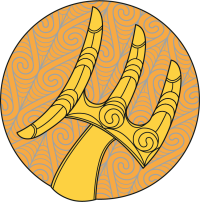
The three-fingered hand of the kaitiakitanga tohu represents nurturing, and the Māori protective factors of everything in the emotional, physical and spiritual domains of our world and universe.
The background pattern is unaunahi (fish scales), overlapping and representing movement within all domains.
Can't find what you're looking for? Try the search bar or view policies.


 Āta is a transformative approach to working in relationships, kaupapa and environments that invites opportunities to use time and space, to make contributions towards the pursuit of oranga.
 The three-fingered hand of the kaitiakitanga tohu represents nurturing, and the Māori protective factors of everything in the emotional, physical and spiritual domains of our world and universe.