Page URL: https://practice.orangatamariki.govt.nz/practice-framework/whai-oranga/te-toka-tumoana/rangatiratanga
Printed: 23/10/2026
Printed pages may be out of date. Please check this information is current before using it in your practice.
Āta is a transformative approach to working in relationships, kaupapa and environments that invites opportunities to use time and space, to make contributions towards the pursuit of oranga.
This means, in our practice we are relating with, understanding with, planning with, acting with and reflecting with tamariki, rangatahi, whānau and others.
This involves connecting with tamariki, rangatahi, whānau and others by developing and attending to relationships in ways that generate a shared understanding of the lived experience of tamariki, rangatahi and whānau and their aspiration.
This supports us to make decisions and co-develop a plan.
I recognise, respect and uphold the rights of tamariki, rangatahi and whānau as we have conversations about harm and risk of harm, such as the right of tamariki and rangatahi to be free from harm and the right to be cared for and protected by whānau.
I work with tamariki, rangatahi and whānau to identify safe whānau members and build their whanaungatanga networks to support them to sustain change.
My deliberate, intentional and relational way of working gives me the best opportunity to provide support for tamariki, rangatahi and whānau to reach their aspiration of oranga.
I ask about positive life-changing moments for whānau in order to widen the frame and highlight when oranga is flowing.
I identify what real, day-to-day support looks like for whānau, acknowledging that they may be living moment-to-moment.
When there is a discrepancy in the history we hold, I listen to and record in CYRAS, the views of tamariki, rangatahi, whānau and others.
I am gentle and respectful with my pātai (enquiry), but I am clear about the reasons why I am there.
I ensure all information is shared and understood and provide time to reflect on it prior to decisions being made.
I am authentic in seeking understanding about whānau experiences (from whānau and others) and how they came to be where they are – I will not be judgemental or let what I have read about the whānau drive what happens next.
I explore to learn from others (hapūiwi, partners, etc.) how they enable whānau self-determination in their mahi.
I listen to understand what leadership looks like in their kāinga and seek ways for me to support this.
This involves working with tamariki, rangatahi, whānau and others in ways that minimise barriers and facilitates the participation and co-development of plans to achieve an agreed outcome.
I am preferencing the views of tamariki, rangatahi and whānau but also taking the views of others into account.
I ensure tamariki, rangatahi and whānau views and aspirations for oranga inform our plans.
I actively seek out opportunities for the whānau to lead kōrero, participate in decision-making and planning to address harm and risk of harm.
I check our shared understanding of what impacts oranga as this leads our planning about sustainable safety.
When we plan together, I understand and support what is important to tamariki, rangatahi and whānau.
I'm aware of when it is appropriate to give advice and when not to – I want to enable people to be the masters of their own destiny.
When having difficult conversations with whānau I remain relational in my practice, I don’t revert to transactional or power-over behaviour.
If I need to take emergency action, I ensure this is understood by tamariki, rangatahi, whānau and others, even if they may disagree with my position.
I share any new information that comes to hand in a timely manner.
I am sure to always emphasise tamariki and rangatahi participation and leadership.
I am always preferencing the views of tamariki, rangatahi and whānau even when they are not present, and I uphold the mana of the whānau in any forum I may be in.
I am prepared to advocate with or for whānau in other spaces – particularly when assumptions and judgements have been made against the whānau.
This involves reflecting with tamariki, rangatahi, whānau and others to learn about their journey by identifying successes and challenges, solutions for maintenance and to celebrate.
I encourage whānau to take the lead in reflecting on our mahi.
I reflect on the successes I see in our mahi together and I encourage tamariki, rangatahi, whānau and others to do the same.
Oranga is a focus of our conversations, and I am aware that we may view oranga differently.
I ensure the views of tamariki and rangatahi are heard, particularly when they are identifying what safety looks like to them.
I reflect with whānau on the pathway to change, identifying highs and lows and how these can be managed.
I encourage tamariki, rangatahi and whānau to give me honest feedback so I can be more responsive.
I demonstrate āta and take time to reflect on our journey – asking tamariki, rangatahi, whānau, and others how my involvement has been with them.
I reflect on any assumptions made about te tamaiti, rangatahi and whānau (by me or others) and find ways to address these.
I reflect that uncertain and tense spaces with tamariki, rangatahi, whānau and others are where growth and learning occur for all.
Tamariki, mokopuna and whānau are active participants in making the decisions that affect them.
Whānau leaders are identified and engaged with.
Self-determination
Tamariki and mokopuna rights are promoted.
Recognise and value the role of tamariki, mokopuna and whānau to achieving their collective vision for wellbeing.
Build and strengthen whānau capacity and capability to be self-determining.
Build and strengthen whānau capacity and capability.
Your role
You can strengthen Māori self-determination by building whānau leadership and capability.
Practices
Practices include:
Encouraging whānau to take an active role in determining the wellbeing outcomes.
Enabling whānau to participate fully.
Tamariki and mokopuna whānau-leadership is nurtured, developed and promoted.
Recognising that safe whānau members are experts of their own tamariki and mokopuna.
Ensuring that the views of mokopuna are informing our response.
Strengthening the emphasis on tamariki and mokopuna participation and leadership.
Reflective questions
Describe a time where you saw whānau and tamariki or mokopuna demonstrate their rangatiratanga.
What actions have you taken to ensure that tamariki and mokopuna can participate fully?
How have you identified and included whānau leadership in the progress of tamariki and mokopuna towards wellbeing?
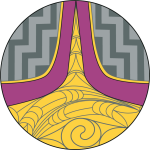
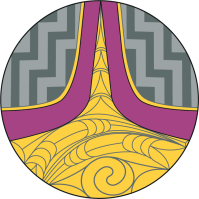
About the rangatiratanga tohu
The two maroon panels in the rangatiratanga tohu represent the taurapa (stern post) of two waka, male and female.
The raperape (double spiral) represents unseen movement and knowledge.
The unaunahi (fish scales) represents the flow of knowledge across all domains.
The rock rendering at the top will be as per Te Toka Tūmoana with Te Ara Poutama (stairway to heaven) upon it, thus linking us back to the navigational space of our ancestors.
Can't find what you're looking for? Try the search bar or view policies.


 Āta is a transformative approach to working in relationships, kaupapa and environments that invites opportunities to use time and space, to make contributions towards the pursuit of oranga.
 The two maroon panels in the rangatiratanga tohu represent the taurapa (stern post) of two waka, male and female.